• Home
  • About Rog
  • Coaching
  • Testimonials
  • Blog
  • Contact

Rog Law Fitness - The Art of Sexification

The Art of Sexification

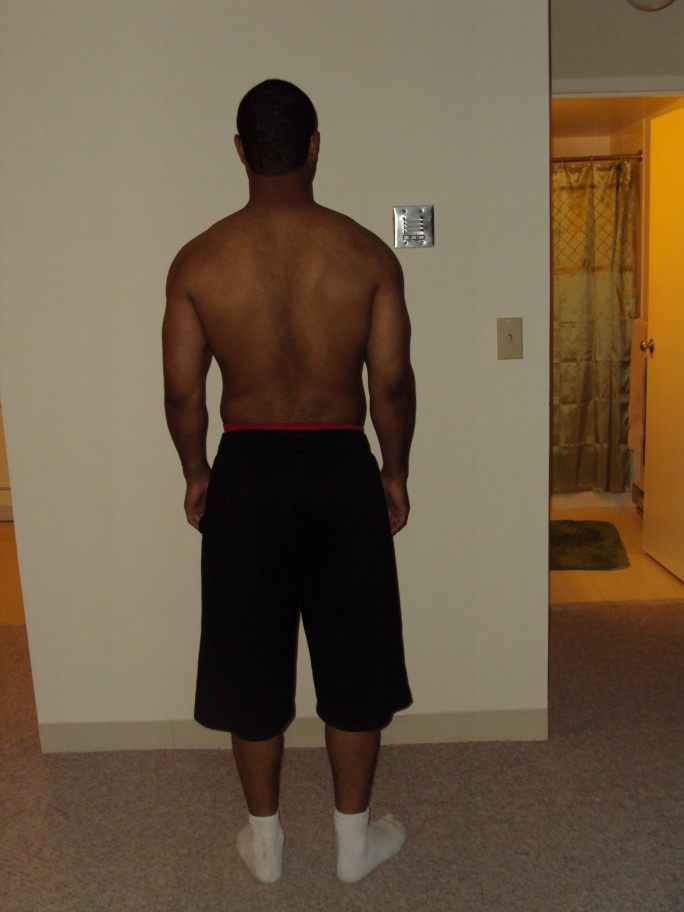
The Sexification Of Rog Law Update #1

October 6, 2010 by Roger Lawson II 9 Comments


Weight: 201

All is going well on the cinnabon front. Yesterday I started experimenting with calorie levels for the long-term body recomposition plan that I’m planning now, which helps explain the increase in weight and water retention in this round of pics – a 4,000 calorie day will do that to ya.

I’ve also upped my training to 4x a week now instead of 2 as I’m looking to put on some muscle while dropping fat over the long haul. Breaking things up this way allows me to keep my time in the gym for each session to a minimum while still getting in enough volume over the course of the week. Shizam!

Until next time.

Calorie Counting: Grab Your Diet By The Cojones

October 5, 2010 by Roger Lawson II 10 Comments

And so we have arrived at the conclusion (or is it just the beginning? Watch in awe as I twirl my curly mustache!) of my body transformation trinity that will undoubtedly go down in history as the most comprehensive treatise ever written on the subject.

Or not.

In the last two posts, I discussed caloric intake starting points as well as macronutrient recommendations depending on what your particular goals were. Now, it is high time that we tackle a subject that is, at least initially, absolutely paramount to your success. That’s right, I’m talking about the dreaded calorie counting.

When I bring up this topic to people who have never counted calories before, more often than not, they drop kick me in the chest and run off screaming bloody murder. All joking aside, many view calorie counting as an annoying, time consuming task that they want as little to do with as humanly possible. And I don’t blame them. As a society, we are becoming busier by the second, and with more and more to keep up with, I can see why people rebel against adding this to their to-do list.

But guess what? If you’re really as committed to your fitness and body composition goals as you say you are, then you have to come to terms with this one fact: if you don’t know how much you’re eating, then you’re just guessing. Notice that I didn’t say what you’re eating, but how much, because the devil isn’t so much in what kinds of foods you eat (although thats important, too), but how much of it. You can eat what are deemed the “cleanest” and “healthiest” foods in the world, and while you may be covered from a micronutrient and phytochemical standpoint, if you can still grab a fist full of fat and aren’t happy with the way you look, chances are you’re simply eating too much for your activity level.

Now that you’re committed to holding yourself accountable for your intake, I’m going to provide you with the only tool that you’ll need to do so, and in the process show you that tracking doesn’t have to be as hellacious as some make it out to be, but instead will put you on the fast track towards sexification.

Tools of the trade

I’m sure that we all know at least one person who can’t lose or gain weight no matter how hard they try. They swear that they are eating all the time, hardly eating at all or some variation of the two. More often than not, this person isn’t intentionally trying to mislead you or themselves, but the fact of the matter is that they’re just horrible at playing the estimation game. They are using their subjective mind to gauge how much they are eating and how hard they are working in the gym, but research has shown that people tend to misreport both their food intake and exercise intensity.

So whats the solution?

Enter the digital food scale.

Since we now know that we initially can’t be trusted to accurately measure our own food intake, we need an objective tool to help take our emotions and feelings out of the equation, and the food scale is just that tool. My good friend Leigh Peele created an eye-opening video demonstrating just how off people can be when left to their own devices, even when they have the best intentions.

Digital food scales are relatively cheap and are a worthwhile investment to have in your kitchen. I personally use a $25 Escali, but click here to view a list of other scales to give yourself some options.

There Will Be Nuts

But enough talk. We’re now about to use an actual example of a food that people tend to overeat by mistake: nuts. While great from a health standpoint as they provide a nice blend of the different kinds of fats, nuts also pack a huge punch from a calorie standpoint. Lets check the stats:

As you can see, 1 serving of walnuts (30 g according to the food label) contains a whopping 20 g of fat. Now lets take a look at how a this serving actually looks in the real world:

Not much, huh? That’s not even a handful, but when you consider that the average person just reaches into a bag with reckless abandon and goes nuts with the Planters, you start to see how this kind of dietary digression can quickly start to derail any chance you have of achieving your fat loss goals.

Now let’s see what happens when I just reach my hand into the bag and come out with the goods:

Well would you look at that! At 67 g, I came out with more than double the serving size and I wasn’t even trying to go overboard. This is only one example, but are you starting to see how this happening to you several times a day could cause you some problems?

Remember when I said that counting calories would be a lot easier than you made it out to be? Here is where I make good on that promise.

In my last post I provided you with a breakdown of how many calories a gram(g) of each macronutrient has, so here it is again for your convenience and viewing pleasure:

1g protein = 4 calories
1g carbohydrate = 4 calories
1g fat = 9 calories

So, using our nuts example from above, lets calculate how many calories are in 1 serving of walnuts by using these numbers.

20g fat x 9 = 180 calories
2g carbohydrate x 4 = 8 calories
5g protein x 4 = 20 calories

Total calories for 1 serving of walnuts = 208

As a side note, when counting carbs, you want to make sure that you subtract fiber grams from that total number as they don’t contribute a significant amount of calories anyway. For instance, in the above example there were actually 4g of total carbs, but I subtracted the 2g of fiber to arrive at the final number of 2g that I used in the calculation.

And that’s how the game is played, my friends. Instead of counting calories per se, you would instead count grams of protein, fat and carbohydrate, which is a lot less stressful and infinitely more manageable than meticulously adding up each and every calorie.

Common Pitfalls And How To Avoid Them

Back in the day, when I was eating tons of chicken breast/thighs, nuts and an assortment of other foods, I had no concept of portion OR calorie control. I really thought that the magic was in avoiding certain foods and as long as I did that, I would be ripped to shreds like a bad report card in no time flat. Needless to say I was wrong a sin, but I want you to learn from my mistake instead of repeating them like a foolish mortal.

Pitfall #1 – Overcomplicating things

Solution – Simplify, simplify, simplify. If you’re weighing a food item, the serving size is based on the form that the product is in when you buy it. For example, if you’re rollin’ through the grocery store and pick up a package of raw ground beef, you would grab a handful of meat, find the serving size and weigh it in its uncooked form. Meat will always weigh less after being cooked, so if you’re going to weigh it cooked, I would cut the serving size in half to account for the water & fat lost during the cooking process.

Example: 4 oz of raw beef = 2-2.5 oz cooked

Leaner meats, such as chicken breast, tend to weigh closer to their raw serving size than fattier meats (think 80/20 ground beef).

If you’re a pasta lover, take heed of this advice as it will save you some tears down the road. A typical serving of pasta is 2 oz measured dry, which is actually a pretty decent amount, but those who are pasta eaters really LOVE THEIR PASTA and rarely tend to eat just 1 serving, or even know what that serving looks like. Welp, now that I’ve gotten that admission of pasta induced self guilt out of the way, let’s move right along!

Pitfall #2 – Being a slave to the scale

Solution – Keep it in perspective. The scale is a tool to keep you accountable to yourself and nothing more. If you’re working towards your goals just fine without it, then good. If you’re not, then stick with it for a week or two, which is a small amount of time in the grand scheme of things. Over time you’ll find that you’re able to reliably size up portions of food with your eyes like you’re in The Matrix or something. As you gain more experience and start to move away from relying on the scale for as much you did in the past,  people will start to notice and become mad jealous of your newfound abilities. If you play your cards right, you might even get invited to the local diner for a malt with all the cat daddys and groovy chicks. True story.

Pitfall #3 – Too anal

Solution – Relax. Breath. Fat loss is certainly an emotional undertaking, so don’t make it more of one by making it harder than it needs to be. You don’t need to weigh your broccoli, spinach, cauliflower or green beans. However, be careful more starchier veggies such as carrots and peas as they tend to have less fiber in them per gram of carbohydrate in each serving and that adds if you go overboard up.When in doubt, use one of the sites below to check up on your veggie of choice and if you notice that it has a lot of carbs relative to fiber, keep an eye on overdoing them.

Having said that, if thinking about it too much is causing you to fall deeper into this pitfall, let it go. I’ve never seen someone who was overweight because they ate too many veggies.

Superior Tech!

I want to wrap this up by giving you my go to websites when I want to get all sexy with watching my intake. I don’t do it very often anymore, but it’s good to have when I want quickly reference a food or create an intake trend to keep myself on track when I’m going after a new goal.

Fitday – This is the most user friendly site that I’ve seen so far. Wanna know the best part? It’s free to sign up, and it even lets you enter your own custom foods that aren’t on the list – win!

USDA Nutrient Database – This is for those that wanna get down to the nitty gritty and know everything and more about a food. Fitday actually uses information from this database, and while this site is nowhere near as sexy as Fitday, its worth checking taking a peek at.

So, how are you feeling? Great? Overwhelmed? If you feel like I’ve left something out or you have any questions, please leave a comment so I can address your concerns directly. Even if you don’t have any questions, come on by and share how you keep track of your intake and how its going for you.

Photo Credit: Michele Eve Photography

Today Was a Good Day

October 4, 2010 by Roger Lawson II 8 Comments

Today I’d like to give you a glimpse into my boring, but effective, dietary life.

When I’m eating in a bit of a caloric deficit to lose body fat, the bane of my existence is eating small, insignificant meals throughout the day because I never get that satisfied feeling in my stomach. Oh sure, I have enough mental willpower to last for a day or two like this, but by day three I’m ready to eat Yogi, Boo Boo and all the goodies in their pick-i-nic basket.

In order to solve this problem, I simply have less overall meals but make them larger to the point where I actually kinda sorta feel full after eating. Some days I eat 2 meals, and on others I eat 3, but regardless of the meal breakdown, my only focus is hitting my macronutrient goals for the day with foods that make my soul smile.


Pic #1 (from the left)
1lb broccoli
1 glorious cinnabon
10 oz grilled chicken breast
16 oz 1% milk
80 g protein  (whey/casein blend)
1/2 lb blueberries
1/2 lb strawberries

Pic #2
10 oz turkey burgers
10 oz chicken breast
6 oz salmon
1 magnificent cinnabon
1/2lb strawberries

Pic #3
15 oz rib eye steak
4 cups of green beans (I almost finished eating them before I realized that I forgot to take the picture)

Not shown in the pictures: Fish oil, multi-vitamin and Vitamin D capsules.

Do you notice a trend developing here? A variety of protein, fruit and vegetable sources that I enjoy eating. I actually love fat a helluva lot more than I enjoy carbs, and since I was trying to control my intake I scaled back the carbs in sake of more fat in my meals.

And now, for your viewing pleasure. Check back tomorrow for a user friendly guide I’ve put together on counting calories and how you can make it work for you.

Photo Credit: id-iom

Macronutrient Madness: What’s In Your Bucket?

September 27, 2010 by Roger Lawson II 4 Comments

In my last post, I gave you the rundown on how to roughly calculate your maintenance, fat loss and muscle gain calorie levels. This is the most important part of the fat loss puzzle, so if you don’t have that concept down yet, go back and read the Cliffsnotes portion of that article before you go any further.

Alright, before we’re ready to blast off, we need to do some clowning around.

One of my favorite shows to watch when I was lucky enough to catch it on was the Bozo The Clown show. The part of the show that always got me pumped up was the grand prize game. In order to win, the kid simply had to stand in place and successfully throws ping pong balls into a series of buckets that progressively were placed further and further away from him.

Despite being deathly afraid of clowns at the time, Bozo was different, most likely because he gave out cool stuff to kids and I secretly hoped he would reach through the TV screen and break me off a piece of that prize action. Sadly I never got broken off, so I’m here to make sure the same thing never happens to you in regards to your physique goals.

Buckets-O-Fat

What is the purpose of a bucket? To hold stuff. What kind of stuff? In the infamous words of The Rock, it doesn’t matter – as long as it can fit into the bucket, the bucket can hold it. If you ever sit by the pale moonlight and ponder life’s most vexing question, you’ll quickly realize that your body is just one big ‘ol living, breathing bucket.

There are tall and wide buckets, short and thin buckets and all sorts of variations in between, but the common denominator here is that they all need constant input in the form of food in order to keep running. While all this is nice and dandy, it also makes the task of achieving your ideal body composition a difficult one at times.

Be careful of what you put into that bucket of yours – too much of anything can cause your bucket to grow in ways and places that you want no part of, but put too little of the right things into it and you might as well buy yourself a one-way ticket to Skeletor island.

Plan For Success

I’m a big fan of making things only as complex as they need to be. I do this mainly because, in my own experience, I’ve found that the less variables you have to try and manipulate and figure out, the better it is, at least in terms of initially getting started. Having said that, I’m a big fan of basing your current intake on the weight you’d like to be in the future, which is a method that I first discovered in Alan Aragon’s Research Review (Sexification Note: Do yourself a favor and subscribe here.) I’m a fan of this method for several reasons:

  1. It’s super practical. There are methods out there that use your percentage of lean body mass to determine how much of a certain macronutrient you should take in for your specific goal, but the main drawback of this is that there are people who don’t have access to a fitness professional who can do test such as skin calliper readings. Even if they do have access, the margin of error between certain body composition methods can be so large that it may not even give you much reliable feedback to begin with, especially if you happen to have a lot of fat to lose. You’re also going to have to adjust these numbers based off your results anyway, so don’t spend too much time trying to get too sexy in figuring out your starting point.
  2. It’s easily applicable. Almost everyone has, at the very least, a slight inkling of the body weight that they’re aiming for.
  3. All of the number crunching can be done in less than 2 minutes, and no matter how busy you are, you have that amount of time to do some planning for your success.

Getcho’ Eat On

Protein – The Constant (4 calories per gram)
For men, if your goal is fat loss or muscle gain: 1g/lb of target body weight
Sexification Note: I imagine that women could get away with a bit less protein (.8g/lb of target body weight) due to higher levels of body fat, but when in doubt could always stick with with the 1g/lb recommendation. I’d rather someone get a little too much protein than not enough.

Example: Rog Law has a target body weight of 185, therefore he will have an intake of 185g of protein, which comes out to 740 calories.

Fat – The Greasy Guardian (9 calories per gram)
Both sexes, regardless of your goal: .4-5g/lb of target body weight is a good starting point.

Example: Rog Law has a target body weight of 185lbs, therefore he will have an intake of between 74 and 93g of fat, which comes out to between 666 and 837 calories

Carbohydrate – The Under-appreciated Underdog (4 calories per gram)
Simply subtract the number of fat and protein calories from your fat loss calorie level that you figured out during my last post.  After doing so, divide that number by 4 to figure out the your carbohydrate grams.

Example: Rog Law sits on his butt cheeks all day, so he has calculated his fat loss calories by multiplying his target body weight of 185lbs by 9.

185 x 9 = 1665 kcals
1665 – 666 (fat) – 740 (protein) = 259 kcals
259/4 = 65g carbs

This would be an example of a non-training day. On resistance or interval training days, you can experiment with adding an extra 50-200g of carbohydrates in, mainly around training time. Yep, there is that much individual variability, so let your goals and results dictate how much you add in here.

If you find that you’re putting on the fat too fast, reduce your carbs and fats systematically until you find that sweet spot where you’re seeing that scale creep up, but so quickly that a ton of blubber comes along for the ride. Likewise, if you’re not losing fat as quickly as you’d like to be, you can follow the same progression. Just keep in mind that as your calorie level and carbohydrate intake drop, your protein requirement increases. If you don’t feel like upping your protein, make sure that you get at least 50g of carbohydrates a day, as their protein sparing effect helps protect your lean muscle mass from being gobbled up in the presence reduced carbohydrate intake and a large caloric deficit.

And I’m out like I have 0 hit points left *adjusts nerd glasses*

Questions? Concerns? Death threats? Leave ’em in the comments section below!

Photo Credit: Jeffk

The Sexification Of Rog Law

September 23, 2010 by Roger Lawson II 13 Comments

I’m all about putting your flaws out into the universe  and using them as motivation to change for the better, so here we go!

I’ve gotten a good 3 training sessions in over the past month and a half. I felt run down and took a week off only to realize that I had no desire to go back to the iron just yet, and I was ok with that. Now, after taking some time off and reassessing my goals (plus seeing how far I’ve fallen), its time to get back to into action.

My strength levels have  taken a huge nosedive from where they used to be. My front squat dropped from 405 to 315 for a 1RM, my bench from 315 to 265, and my trap bar deadlift from 585 to a comparatively weaksauce 495. I’m sure a lot of this was of a neural nature and will be regained with time, but I know I’ve lost a fair amount of muscle as well.

My overall movement quality is like one of those busted Chuck-E-Cheese robots that haven’t been serviced since 1990. It was slowly getting better due to the mobility work I did during my training sessions, but since those were few and far between its no wonder that I’m back to pure suckage again.

The chub is back in full force, and it ain’t pretty, so it has to go. And this is where you come in.

I invite you all to join me on this personal journey of sexification, and if you’ve recently found yourself settling for less than what you’re capable, I encourage you to get moving in the right direction. On your own terms.

Speaking of doing things on your own terms, that is exactly what I’m going to be doing as far as my food choices and training are concerned. I’m going to simply train 2x a week for about 45 minutes and walk for an hour every day to burn some extra calories.

Oh yeah , and I’m going to have a Cinnabon every day for the next 30 days. Every other week I’ll make sure to post picture updates, and at the conclusion I’ll go into detail about what unexpected things I learned and encountered along the way that may help you in your own quest.

My secondary goal here is to demonstrate that your diet doesn’t have to be boring and that with proper planning you can still have a healthy diet while chowing down on your favorite foods.

Starting weight: 198lbs
Target weight: 185lbs


« Previous Page
Next Page »

"What you can expect from Roger as a trainer is his visions the big picture. He doesn't see life, fitness, or Sexification through a narrow view. He takes the time to get to know his clients inside and out. He understands that the victory to their journey is one in more ways than just the workout. However, when it comes to that workout, he has the chops. He is the true epitome of Sexification."

— LEIGH PEELE

Click Here To Learn More About Consults

GET HOT SEXIFICATION TIPS FOR A BETTER BODY, A BETTER MIND AND A BETTER LIFE

Enter your email below and I'll give you the Universe's Sexiest Newsletter. You'll get free tips, delivered hot to your inbox, that you can use to make every single day sexier.

You'll get no spam. That'd be lame.

Stalk Me

  • Facebook
  • Twitter
  • YouTube

Copyright © 2026 · Magazine Pro Theme on Genesis Framework · WordPress · Log in